History Timeline
Explore significant events throughout history
Donald Trump becomes president of US again
I graduate from University of Washington and start my PhD at MIT
Third ceasefire in Israel-Hamas war begins under US-backed peace plan
US Supreme Court schedules consideration of Kim Davis case seeking to overturn Obergefell v. Hodges marriage equality ruling
7.5-magnitude earthquake strikes Japan's Noto Peninsula, killing 504 people
Lai Ching-te wins Taiwan's presidential election
Japan becomes fifth country to achieve soft lunar landing with SLIM mission
Intuitive Machines' Nova-C becomes first commercial vehicle to land on Moon
Donald Trump wins U.S. presidential election, first president elected to nonconsecutive second term since 1892
South Korean President Yoon Suk Yeol impeached after attempting to declare martial law
I turn 18 and come out to my parents
Rafah offensive begins in Gaza; Israeli military operations intensify across Gaza Strip
Fall of the Syrian Assad regime
Supporters of Jair Bolsonaro storm Brazilian government buildings following electoral defeat
7.8-magnitude earthquake devastates Turkey and Syria, killing over 59,000
ICC issues arrest warrant for Vladimir Putin, first against permanent UN Security Council member leader
Xi Jinping secures unprecedented third term as China's president
Silicon Valley Bank fails, largest bank failure since 2008
OpenAI unveils GPT-4, capable of processing images and up to 25,000 words
WHO declares end to COVID-19 public health emergency
October 7th Hamas attack on Israel kills 1,195 people; 251 taken hostage; deadliest day in Israeli history
Israel-Hamas war in Gaza; Israel's longest military conflict (2023 CE - 2025 CE)
Israel invades Gaza with stated goals of destroying Hamas and freeing hostages
Hunga Tonga volcanic eruption triggers Pacific tsunami warnings, most powerful eruption of 21st century
Russia launches full-scale invasion of Ukraine, displacing 15.7 million
First successful heart transplant from pig to human in Baltimore
2022 Winter Olympics in Beijing; first city hosting both Summer and Winter
2022 FIFA World Cup held in Qatar, won by Argentina
Queen Elizabeth II dies after 70 years as monarch
OpenAI releases ChatGPT, bringing large language models to widespread public adoption
Supporters of Donald Trump attack U.S. Capitol during election certification; 5 dead
Joseph Biden becomes president of US
Myanmar military stages coup removing Aung San Suu Kyi from power
NASA's Perseverance rover and Ingenuity helicopter land on Mars
Ingenuity helicopter performs first powered flight on another planet
James Webb Space Telescope launches
I start as a freshman at the University of Washington
Fourth Gaza War
Facebook rebrands as Meta Platforms Inc., pivoting toward 'metaverse'
Andy Jassy becomes CEO of Amazon, succeeding Jeff Bezos
U.S. drone strike kills Iranian general Qasem Soleimani at Baghdad airport
WHO declares COVID-19 a public health emergency of international concern
WHO declares COVID-19 a pandemic
United Kingdom formally departs from European Union
Kobe Bryant and daughter die in helicopter crash near Calabasas
2020 Summer Olympics postponed to 2021 due to COVID-19 pandemic
I start attending the Transition School program at the University of Washington
US Supreme Court rules in Bostock v. Clayton County that sexual orientation and gender identity discrimination violates Civil Rights Act of 1964
Israel establishes normalization agreements with Bahrain, UAE, Morocco
COVID-19 vaccines begin deployment to general public
Venezuelan presidential crisis as Juan Guaidó declares President Maduro illegitimate
Volodymyr Zelenskyy wins Ukraine's presidential election in landslide
Emperor Akihito abdicates from Japan's throne, first imperial abdication in nearly two centuries
Notre-Dame Cathedral in Paris suffers catastrophic fire during Holy Week
EventHorizon Telescope releases first-ever image of a black hole in galaxy M87
Cyclone Idai strikes Mozambique, causing over 1,000 deaths
First known COVID-19 case identified in Wuhan, China

Former Russian agent Sergei Skripal poisoned with Novichok nerve agent in England
Kim Jong Un crosses into South Korea, first North Korean leader to do so since 1953
SpaceX successfully launches Falcon Heavy rocket
2018 FIFA World Cup held in Russia, won by France
Great March of Return protests in Gaza
Eritrea and Ethiopia sign peace agreement
the "Nation State Law" / "Basic Law" is passed by Israel
UK initiates Article 50, formally beginning Brexit negotiations
Hurricanes Harvey, Irma, and Maria devastate Caribbean and US
Las Vegas shooting kills 60 people and injures 867, deadliest mass shooting by lone gunman in US history
SpaceX successfully reflights first orbital-class rocket
Fortnite battle royale game launches, becoming global phenomenon
Google Brain introduces transformer architecture in 'Attention Is All You Need,' enabling modern large language models
Donald Trump becomes president of US
UK votes to leave European Union, triggering Brexit
Donald Trump elected 45th U.S. President over Hillary Clinton
Pokémon Go released, breaking numerous records in sales and revenue
2016 Summer Olympics held in Rio de Janeiro, Brazil
Google DeepMind's AlphaGo defeats world Go champion Lee Sedol
7.8-magnitude earthquake devastates Nepal, killing approximately 9,018 people
Iran reaches historic nuclear agreement with long-term limits in exchange for sanctions relief
Cuba and United States restore full diplomatic relations after 54 years
Charlie Hebdo shooting in Paris kills 12 people
Paris coordinated terror attacks kill 137 people
NASA's New Horizons spacecraft becomes first to visit Pluto
US Supreme Court rules in Obergefell v. Hodges that same-sex marriage is legal nationwide
Ukrainian President Viktor Yanukovych removed after Revolution of Dignity protests
Russia formally annexes Crimea
Malaysia Airlines Flight 370 disappears with 239 people
ISIS declares itself a caliphate
Malaysia Airlines Flight 17 shot down over eastern Ukraine, 298 killed
West African Ebola epidemic becomes most severe in history; 28,616 infected, 11,310 deaths
India's Mangalyaan reaches Mars orbit, first Asian nation to achieve this
Satya Nadella becomes CEO of Microsoft, succeeding Steve Ballmer
Facebook acquires WhatsApp for $19 billion
Third Gaza War becomes most deadly conflict in Gaza
Pope Benedict XVI resigns, first to do so voluntarily since 1294
Cardinal Jorge Mario Bergoglio elected Pope Francis
Egyptian President Mohamed Morsi deposed in military coup
Chelyabinsk meteor explosion over Russia injures approximately 1,500 people
Typhoon Haiyan kills at least 6,241 people across Philippines and Vietnam
Euromaidan pro-EU demonstrations begin in Ukraine

Vladimir Putin elected President of Russia
Costa Concordia cruise ship disaster kills 32 people off Italy's coast
Scientists at CERN announce discovery of particle consistent with Higgs boson
NASA's Curiosity rover successfully lands on Mars
Barack Obama wins reelection as U.S. President
Xi Jinping becomes General Secretary of China's Communist Party
Hurricane Sandy causes 233 deaths and $68.7 billion in damages
Sandy Hook Elementary School shooting kills 20 students and 6 teachers in Connecticut
AlexNet achieves breakthrough in ImageNet competition, launching deep learning revolution
Facebook goes public with IPO at $38 per share, raising $16 billion
Facebook acquires Instagram for $1 billion
Tunisia's president flees after protests, marking start of Arab Spring uprisings
Egyptian President Hosni Mubarak resigns after widespread protests
9.1-magnitude earthquake and tsunami strike Japan, triggering Fukushima nuclear crisis; nearly 20,000 dead
U.S. military operation kills al-Qaeda leader Osama bin Laden in Pakistan
South Sudan becomes independent, the world's newest nation
Libyan leader Muammar Gaddafi killed during civil conflict
Royal wedding of Prince William and Catherine Middleton watched by ~2 billion viewers
NASA's Space Shuttle program concludes with Atlantis's final mission
"Don't Ask, Don't Tell" repealed on September 20; gays, lesbians, and bisexuals can serve openly in US military
US intervention in Libya
Arab Spring uprisings throughout the Middle East
7.0-magnitude earthquake strikes Haiti, killing approximately 315,000 people
Polish President Lech Kaczyński dies in plane crash near Smolensk, Russia
8.8-magnitude earthquake in Chile kills over 525 people
Apple releases the first iPad
Instagram officially launches as photo-sharing social media platform
Julia Gillard becomes Australia's first female Prime Minister
Barack Obama becomes president of US
Matthew Shepard and James Byrd Jr. Hate Crimes Prevention Act passed, expanding protections to include sexual orientation and gender identity
Global financial crisis due to subprime mortgage crisis
Second Lebanon War begins

Israel withdraws settlers and military forces from Gaza
I was born
Massachusetts becomes first US state to legalize same-sex marriage
Facebook founded by Mark Zuckerberg and Harvard roommates
US Supreme Court rules in Lawrence v. Texas that sodomy laws nationwide are unconstitutional
Iraq War (2003 CE - 2011 CE)

NIST adopts Advanced Encryption Standard replacing DES
Netherlands becomes first country in the world to legalize same-sex marriage
9/11 attacks
War in Afghanistan (2001 CE - 2021 CE)
George W. Bush becomes president of US
Steve Ballmer becomes CEO of Microsoft, succeeding Bill Gates
Camp David talks collapse
Second Intifada begins after Ariel Sharon visits Temple Mount

Senate acquits President Clinton on both impeachment charges

Clinton-Lewinsky scandal exposed; Clinton denies affair
Clinton admits 'improper relationship' with Monica Lewinsky
House of Representatives impeaches President Clinton for perjury and obstruction
Border dispute leads Eritrea to war with Ethopia (1998 CE - 2000 CE)
Amazon goes public on NASDAQ with IPO
IBM's Deep Blue defeats chess world champion Garry Kasparov
Hochreiter and Schmidhuber invent Long Short-Term Memory networks
Wiles and Taylor's paper on "Ring-theoretic properties of certain Hecke algebras" fills the gap in the proof of Fermat's Last Theorem - ring theory comes full circle to solve the problem that helped create it
Oslo II Accord signed, establishing Palestinian Authority and limited self-rule
Assassination of Yitzhak Rabin by Jewish extremist
Windows 95 released by Microsoft, major commercial success
Massacre at Al-Aqsa Mosque by Jewish extremist
Amazon founded by Jeff Bezos in Seattle as online bookstore
Oslo I Accord signed, establishing mutual recognition
Eritrea votes for independence in UN supervised referendum and becomes fully sovereign state
Bill Clinton becomes president of US
"Don't Ask, Don't Tell" policy enacted, allowing closeted gay people to serve in US military
President George H.W. Bush pardons six Iran-Contra officials including Caspar Weinberger
Orlando Patterson writes *Freedom in the Making of Western Culture*
Algerian Civil War, over 150k killed (1991 CE - 2002 CE)
The Eritrean Liberation Front defeats Ethiopia, Eritrea becomes independent
Gulf War (1990 CE - 1991 CE)
Invasion of Panama by US
George H.W. Bush becomes president of US
Hamas founded as offshoot of the Muslim Brotherhood
First Intifada begins in Gaza and West Bank
Yasumasa Kanada works out $$\pi$$ to 134217000 decimal places.
CCP endorses authoritarian state capitalism, mixing market economy with tight political control.
Microsoft relocates headquarters to Redmond, Washington
Microsoft goes public on NASDAQ
Iran-Contra affair exposed in Lebanese magazine
Rumelhart, Hinton, and Williams popularize backpropagation algorithm for training neural networks
Windows 1.0 released by Microsoft
Iran-Contra affair: Reagan administration secretly sells arms to Iran, diverts funds to Nicaraguan Contras (1985 CE - 1987 CE)
Invasion of Grenada by US
First Lebanon War; Israel invades Lebanont to expel PLO
Sabra and Shatila Massacres under Israeli watch and support
Robert Griess constructs the Monster group M as the automorphism group of the 196,884-dimensional Griess algebra, completing the discovery of all 26 sporadic simple groups. He calls the 20 sporadics contained in the Monster the 'happy family' and the remaining 6 the 'pariahs'
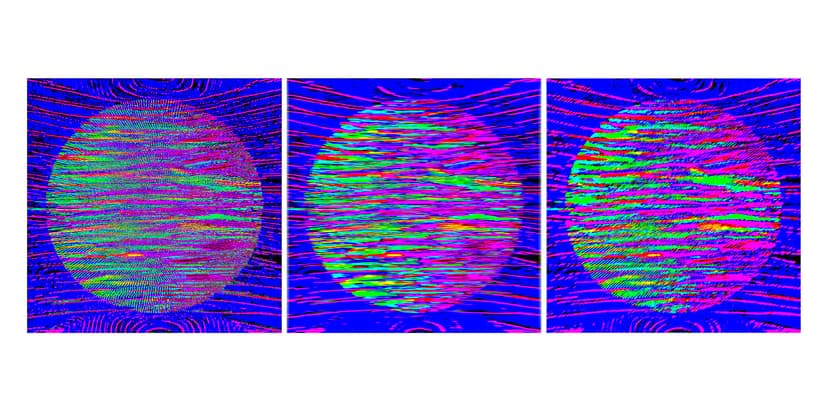
The classification of all finite simple groups was completed, solving a problem posed by Hölder in 1893
IBM PC released with Microsoft's MS-DOS operating system
Ronald Reagan becomes president of US
Gilles Deleuze and Felix Guattari write *A Thousand Plateaus*
Saul Kripke writes *Naming and Necessity*
Camp David Accords, Israel withdraws from Sinai and establishes peace with Egypt
United States removes troops and diplomatic recognition from Taiwan
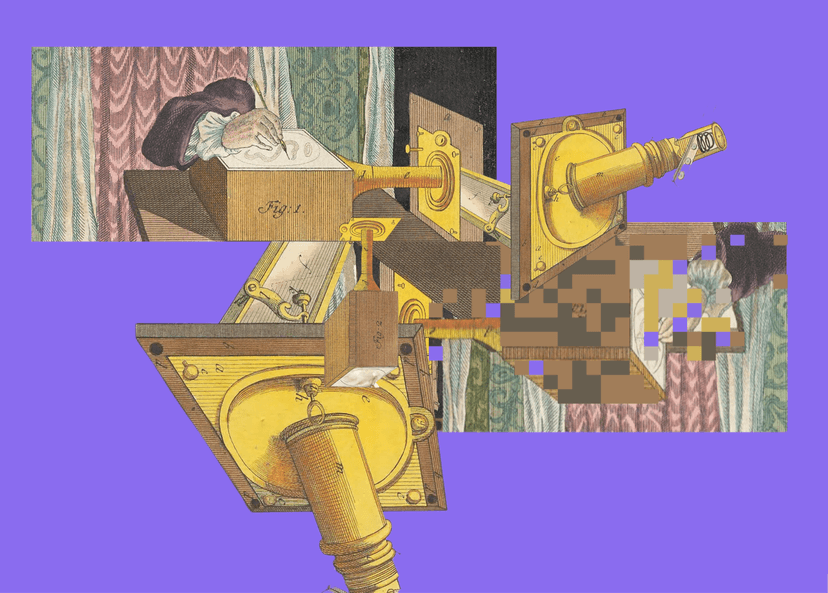
Rainbow flag first used as symbol of LGBT pride by Gilbert Baker in San Francisco
Harvey Milk and Mayor George Moscone assassinated in San Francisco by Dan White
Rivest, Shamir, and Adleman invent RSA algorithm, first practical public-key cryptosystem
Jimmy Carter becomes president of US
Harvey Milk elected to San Francisco Board of Supervisors, one of first openly gay elected officials in US
Quebec becomes first major jurisdiction to prohibit discrimination based on sexual orientation
John Thompson finds the Thompson group Th, constructed by Smith as the automorphism group of a lattice in the 248-dimensional Lie algebra of E8. Michael O'Nan discovers O'N, the last of the six 'pariah' sporadic groups
Zhou Enlai dies; radicals demonstrate in his memory in Tiananmen Square
A devastating earthquake kills a quarter of a million people in Tangshan, China -- the "mandate of heaven" has been lost
Diffie and Hellman publish 'New Directions in Cryptography,' introducing public-key cryptography and Diffie-Hellman key exchange
Mao Zedong dies on September 9th

Microsoft founded by Bill Gates and Paul Allen in Albuquerque, New Mexico
Michel Foucault writes *Discipline and Punish*
Deng Xiao Ping is reinstated to inner circle of power in CCP
Janko finds J4, the last of his four sporadic groups. Its existence is verified by computer in 1980. J4 is a 'pariah' -- not a subquotient of the Monster. Simon Norton and Koichiro Harada independently discover the Harada-Norton group HN
China seizes the Xisha islands from South Vietnam
Saturday Night Massacre in Watergate scandal; special prosecutor fired
Nixon resigns over Watergate scandal, only US president to resign; Gerald Ford becomes president
Gerald Ford pardons Richard Nixon
Yom Kippur War, surprise attack by Egypt and Syria on Israel
Roe v. Wade, Supreme Court legalizes abortion
American Psychiatric Association removes homosexuality from the Diagnostic and Statistical Manual
US ends draft for Vietnam War
Pinochet overthrows Allende with U.S. support, establishing military dictatorship in Chile
Bernd Fischer and Robert Griess predict the Monster group as containing a double cover of the Baby Monster. The Baby Monster is also discovered by Fischer. Arunas Rudvalis finds Ru, later constructed by Conway and Wales

Israeli athletes killed at the Munich Olympics by Black September
Watergate break-in at Democratic National Committee headquarters
Nixon visits China
Intel Releases the 4004 Microprocessor
Bloody Sunday in Northern Ireland, British Army kills 13 unarmed protesters in Derry
Richard Lyons characterizes the Lyons group Ly; Sims proves its existence using computer calculations. Ly is a 'pariah' -- not contained in the Monster (1972 CE - 1973 CE)
Pope Pius VI officially condemns the Civil Constitution of the clergy
Proof that cyclotomic integer rings Dp fail unique factorization for all primes p ≥ 23, showing Kummer's ideal theory was absolutely necessary
Bernd Fischer discovers the three Fischer groups Fi22, Fi23, Fi24 while investigating groups generated by 3-transpositions
Nixon declares War on Drugs
Bangladesh War of Independence / Liberation War
Lin Biao, who attempted a coup against Mao, is put on a plane fleeing China, crashing in Mongolia
UN awards China a seat
"Ping-Pong" diplomacy trip between American ping pong team and Chinese
Incursion of Vietnam War into Cambodia
Overthrow of Cambodian government by Khmer Rouge, leading to genocide in 1975
Black September in Jordan, PLO is expelled from Jordan
Dawson's Field Hijackings in Jordan by PFLP
American journalist Edgar Snow is invited to stand beside Mao at the 1970 national day parade
Matiyasevich proves Hilbert's tenth problem is undecidable
Seppo Linnainmaa publishes automatic differentiation method, foundational for backpropagation
Kent State shootings
First Gay Pride marches held in New York, Los Angeles, San Francisco, and Chicago commemorating Stonewall
Death of Abdel Nasser, Sadat becomes president of Egypt
Black September in Jordan, PLO vs. Jordanian government

Michio Suzuki discovers the Suzuki sporadic group Suz as a rank 3 permutation group. Jack McLaughlin discovers McL. Dieter Held finds He by studying involution centralizers like M24's
Janko predicts J3, constructed by Higman and McKay. J3 is later shown to be a 'pariah' -- one of the six sporadic groups not contained in the Monster
Apollo 11 mission, first moon landing
Muammar Gaddafi leads coup in Libya
Richard Nixon becomes president of US
Canada decriminalizes homosexuality; Prime Minister Trudeau states "the state has no place in the bedrooms of the nation"
Stonewall riots at Greenwich Village gay bar in New York City mark turning point for LGBT rights movement
Gay Liberation Front formed in New York following Stonewall riots
The Troubles begin in Northern Ireland between Catholics and Protestants
China-USSR border conflicts at the Ussuri River border
Woodstock music festival
Fair Housing Act passed
Prague Spring and USSR invasion of Czechoslovakia
Mai Lai massacre in Vietnam
Tet Offensive and beginning of US withdrawal from Vietnam
Huge student protests in the US, France, Mexico, Germany, Italy
Martin Luther King Jr. assassinated
Robert F. Kennedy assassinated
Hellen Keller dies
John Steinbeck dies
Edith Piaf dies
Yuri Gagarin dies
Paris May riots against Charles de Gaulle, nearly topples government
Battle of Karameh between Palestinians and Israelis
Democratic National Convention riots in Chicago
Tlatelolco massacre against protesters in the Mexico City Olympic Games
Italy's Hot Autumn, massive strikes and protests
Hall and Wales construct J2 (the Hall-Janko group) as a rank 3 permutation group on 100 points, predicted by Janko. Higman and Sims discover HS while attending Hall's presentation, by checking for rank 3 permutation groups containing M22
John Conway discovers Co1, Co2, and Co3 as automorphisms of the Leech lattice. He identifies connections to McLaughlin's McL and the Higman-Sims group HS. This opens the 'second generation' of sporadic groups (1968 CE - 1969 CE)
Six-Day War, Israel occupies West Bank, Gaza, Sinai, Golan Heights
Jacques Derrida writes *Of Grammatology*
UN Resolution 242 calls for "land for peace"
Summer of Love in San Francisco
Che Guevara captured and executed
Loving v. Virginia, Supreme Court strikes down anti-miscegenation laws
England and Wales decriminalize homosexuality for men over 21 years old
Nigerian Civil War, >1 million killed mainly from famine
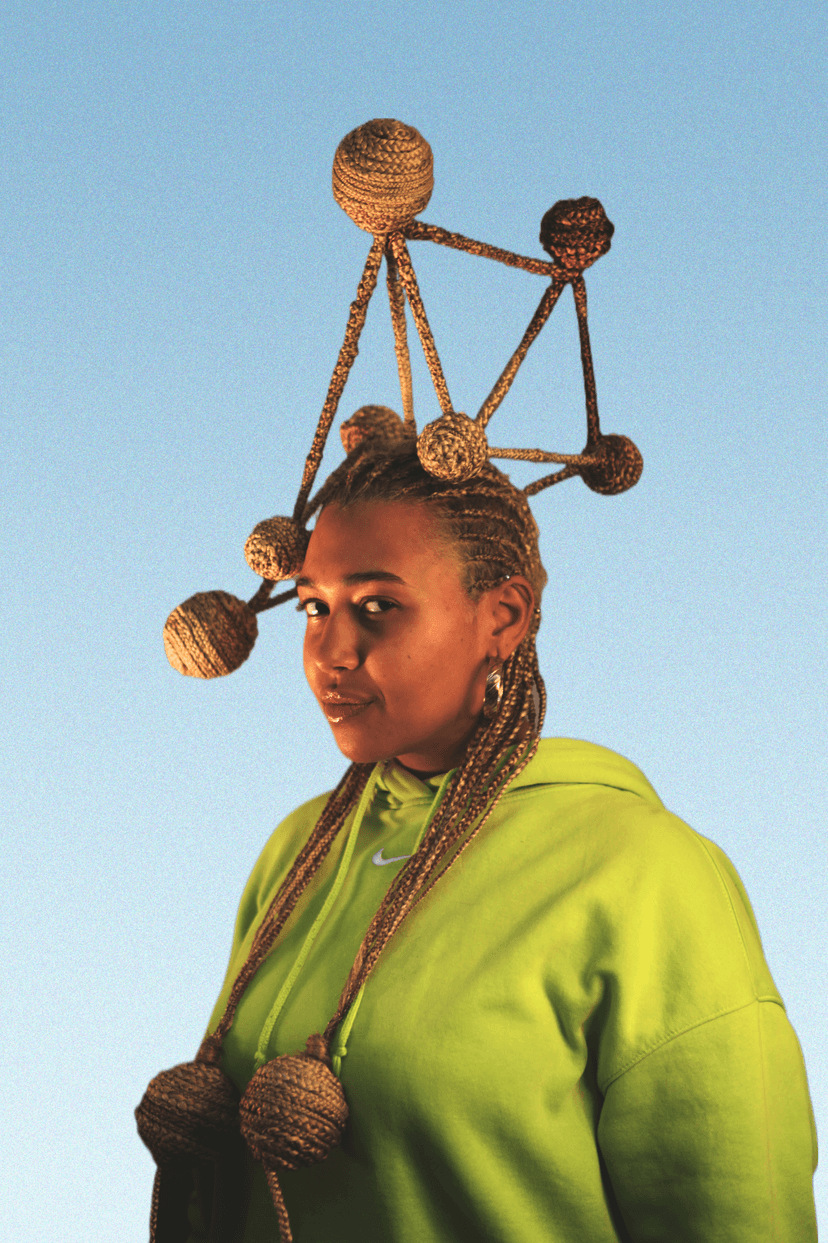
Chinese Cultural Revolution begins
Formation of the Black Panther Party
Botswana and Lesotho gain independence
South African border war begins
Zvonimir Janko discovers J1, the first sporadic simple group found since Mathieu's groups nearly a century earlier. The discovery causes a 'sensation' among group theorists and triggers an intense search for more sporadic groups
Voting Rights Act passes
Indian-Pakistan War
Malcolm X assassinated
Rhodesia declares independence from UK
Civil War in Dominican Republic, US intervenes
Indonesia anti-communist purge/coup begins
US involvement in the Vietnam War (1964 CE - 1973 CE)
Founding of the Palestine Liberation Organization in East Jerusalem
France recognizes the People's Republic of China
China successfuly tests a nuclear bomb
Jacques Tits shows that the derived subgroup of the Ree group 2F4(2) is a new simple group, now called the Tits group. Sometimes counted as the 27th sporadic group, it occupies an unusual position between groups of Lie type and sporadic groups
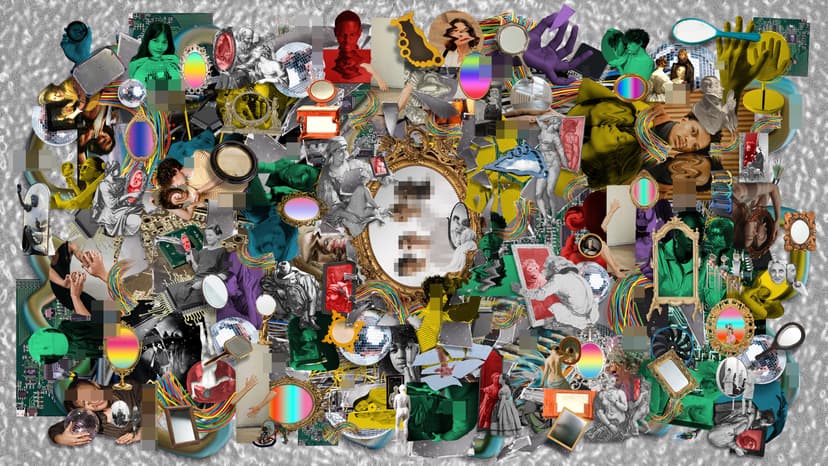
Walter Feit and John Thompson proved that every finite group of odd order is solvable
Assassination of John F. Kennedy
Lyndon B. Johnson becomes president of US
Cuban Missile Crisis, peak of US-Soviet tensions
Illinois becomes first US state to decriminalize same-sex sexual activity
Following the 1958 Central Committee announcement that official labors should do labor, 2 million urbanites have been sent to the countryside for 1-year stints, although this appeared not to have reduced bureaucratism and factionalism, leading to the Cultural Revolution
Ethiopia annexes Eritrea
Evian accords grant Algerian independence from France
China and India fight a brief border war
Taming of CCP agricultural policy; 30% of households are farming inependently; the CCP launches the Socialist Education Movement to ensure ideological alignment and pinning the Great Leap Forward's failures on local officials
Bay of Pigs invasion of Cuba by US
Eritrean War of Independence begins
John F. Kennedy becomes president of US
Rome hosts the Summer Olympics
Mao Zedong orders a second Great Leap Forward, leading to the worst famine in human history
Coup in Iraq overthrows King Faisal II
Great Leap Forward in China, Mao's attempt to rapidly industrialize and collectivize agriculture, away from the Soviet model. China should rely on its one major resource -- people. (1958 CE - 1961 CE)
In Jiangsu, Pi County, peasants produce 105k paintings, drawings, and murals depicting a glorious Communist future
The CCP knows about widening famine in regions but continues with the Great Leap Forward
Frank Rosenblatt invents the perceptron, first trainable neural network
Population of the urban industrial working class in China reaches 10 million; urban population reaches 100 million
Anti-rightist campaign in China, 1.1m people branded as rightists (1957 CE - 1958 CE)
Dartmouth Conference establishes artificial intelligence as an academic discipline; term 'artificial intelligence' coined by John McCarthy
Suez Crisis, Egypt nationalizes the Suez Canal -- UK, France, and Israel invade Egypt, Israel temporarily occupies Sinai and Gaza
Israeli occupation of Gaza following the Suez Crisis (1956 CE - 1957 CE)
Believing that intellectuals were not voicing their concerns, Mao Zedong launches the Hundred Flowers Campaign, inviting criticism of the government
Large-scale strike in Shanghai (1956 CE - 1957 CE)
CCP announces 5-7 year plan to reduce illiteracy, process of simplifying Chinese characters begins
Mao launches the hundred flowers campaign
Daughters of Bilitis founded in San Francisco, first lesbian rights organization in the United States
Vietnam War (1955 CE - 1975 CE)
Mao aims to accelerate cooperatization by encouraging labor-intensive industries
Alan Turing commits suicide after being subjected to chemical castration as punishment for homosexuality
First Indochina War ends, Vietnam divided at 17th parallel
Algerian War of Independence against France (1954 CE - 1962 CE)
Full achievement of CCP state building in China; state and Party organs function fully in China
Qibya Massacre by Israeli forces
Death of Stalin; Khrushchev becomes leader of USSR
CCP announces end of "new democracy" phase, beginning of First Five-Year Plan, emphasizing central planning and growth of industry
CCP introuces new quota-based district-level system for agricultural production (1953 CE - 1954 CE)
Frankfurt School formally re-established in Frankfurt; Horkheimer, Adorno, and Pollock return to West Germany
Wittgenstein's *Philosophical Investigations* published posthumously, introducing language-games and meaning-as-use
Dwigth D. Eisenhower becomes president of US
Mau Mau Urprising in Kenya against British rule
Eritrea federated with Ethopia under UN resolution
"Land to the Tiller" movement complete under Communist China; 43% of cultivated land redistributed to 60% of rural population; 88% of households affected
Five Antis Campaign by CCP targets bribery and tax evasion by businessmen
Dismantling of secret societies in Shanghai by CCP

King Abdullah of Jordan is assassinated at Al-Aqsa Mosque for perceived collaboration with Israelis
Marvin Minsky and Dean Edmonds build SNARC, the first neural network machine
Three Antis campaign by CCP targets corruption, waste, and mismanagement (1951 CE - 1952 CE)
Korean War (1950 CE - 1953 CE)
CCP passes the Agrarian Reform Law, redistributing land to peasants
Israel passes Absentee Property Law which allows confiscation of Palestinian property, and Preventing Infiltration Law which allows expulsion of Palestinians, denies right of return to Palestinians expelled during the 1948 war
Sino-Soviet Friendship Treaty signed
Alan Turing publishes 'Computing Machinery and Intelligence,' proposing the Turing test
CCP passes the Marriage Law, affirming the euqal rights of both sexes and protection of lawful interests of women and children
Mattachine Society established in Los Angeles, one of the earliest American homosexual rights organizations
CCP launches aggressive anti-counter-revolutionary campaign, arresting 2.6m and carrying out 712k (1950 CE - 1951 CE)
Tens of thousands of intellectuals go through thought reform at revolutionary universities in China (1950 CE - 1951 CE)
Indonesian independence recognized by Netherlands after armed struggle
Simone de Beauvoir writes *The Second Sex*
Claude Shannon publishes 'Communication Theory of Secrecy Systems,' founding modern cryptography
John von Neumann uses the ENIAC computer to work out $\pi$ to 2035 decimal places
Armistic agreements signed, forming Green Line
Beijing, Nanjing, Shanghai, Wuhan, and Hangzhou fall to the Communists
Mao Zedong declares the People's Republic of China on October 1
The new Communist government closes 224 brothels and arrests 1,286 prostitutes in Beijings

Deir Yassin massacre by Irgun and Lehi, Jewish paramilitary groups
Apartheid established in South Africa
Communist forces surround the Chinese cities Shenyang and Changchun
Israel declares independence on May 14
British Mandate ends; Arab-Israeli War begins May 15
Exodus steamship carrying Jewish refugees is returned to Germany
UN General Assembly Resolution 181 proposes partition of Palestine
Partition of India, creation of Pakistan
Theodor Adorno and Max Horkheimer write *Dialectic of Enlightenment*
Italians vote in referendum to abolish monarchy, establishing Italian Republic
Anglo-American Committee of Inquiry investigates Jewish-Arab conflict
Land reform begins in "old liberated areas" in Northern China under Communist influence

Roosevelt dies on April 12, Truman becomes president
Hiroshima and Nagasaki atomic bombings on August 6 and 9
Harry Truman becomes president of US
Mao Zedong visits Chongqing to negotiate with Chiang Kai-Shek in August
End of World War II, establishment of the United Nations, beginning of the Cold War
Holocaust ends; estimated 3,000-9,000 gay men died in Nazi concentration camps
Sartre delivers lecture 'Existentialism Is a Humanism' at Club Maintenant in Paris
First post-war gay bars open in major European and American cities
Setif and Guelma Massacres, French forces kill thousands of protesting Algerians
Taiwan is returned to China from Japan
Adorno and Horkheimer publish *Dialectic of Enlightenment*, critique of Enlightenment rationality
Assassination of Lord Moyne by the Stern Gang, extremist Zionist group
Japanese launch Operation Ichigo
Rome is liberated by Allied forces during WWII
Wang Jingwei dies
Mussolini deposed, Italy surreners to Allies
Jean-Paul Sartre writes *Being and Nothingness*
McCulloch and Pitts develop first mathematical model of artificial neural networks
Biltmore Conference in New York calls for a Jewish state in Palestine
Japanese attack Burma
Chiang Kai-shek meets with Mohatma Gandhi in India
Henan famine in China, 2-3 million people die
Mao begins the Rectification Movement
Amin al-Husseini, Grand Mufti of Jerusalem, meets with Adolf Hitler in Berlin
Japan attacks Pearl Harbor, US enters WWII
Armand Borel and Claude Chevalley made fundamental contributions to the theory of algebraic groups (1940 CE - 1949 CE)
Japan allows Wang Jingwei to establish a puppet government in Nanjing
White Paper limits Jewish immigration into Palestine
Italy signs Pact of Steel with Germany
World War II (1939 CE - 1945 CE)
Chinese unified front breaks dams on the Yellow River to slow the Japanese advance, killing 500k locals either due to drowning or starvation
Mao Zedong marries Jiang Qing, Shanghai actress
Peel Commission investigates 1936 Arab Revolt and recommends partition
Second Sino-Japanese War begins when Japan launches a full-scale invasion of China
"Black Saturday" --- 1000 people killed in Shanghai
The "Rape of Nanking" by Japanese forces
Arab Revolt against British rule and Zionist expansion
Alan Turing publishes 'On Computable Numbers' introducing the Turing machine; Church and Turing independently prove the Entscheidungsproblem unsolvable
Chiang Kai-shek flies to Xi'an to destroy the Communist base in Yan'an but is held hostage by Zhang Xueliang to form a second United Front to fight Japan
Izz al-Din al-Qassam is killed by British forces, becomes a symbol of Palestinian resistance
Frankfurt School relocates from Geneva to New York City, joining Columbia University
Italian invasion of Ethiopia under Mussolini
Chinese Communists reach Yan'an, establish base
December Ninth demonstrations by Beijing students protesting Chiang Kai-Shek's civil war with the communists and refusal to fight Japan
Chiang Kai-Shek launches the "New Life Movement" to simultaneously promote Confucianism, Christianity, and fascism
Chinese Communists start the long march to escape Nationalist forces
Aliyah Bet, illegal Jewish immigration to Palestine (1934 CE - 1948 CE)
Hitler becomes Chancellor of Germany
Nazi Germany criminalizes homosexuality and burns Magnus Hirschfeld's Institute for Sex Research
USSR recriminalizes homosexuality under Stalin with penalties up to 5 years imprisonment
Frankfurt School flees Nazi Germany; Institute relocates from Frankfurt to Geneva
Denmark decriminalizes homosexuality
Franklin D. Roosevelt becomes president of US
Chiang Kai-Shek launches fourth and fifth encirclement campaigns against the Communists
An anti-Japanese mob kills a Japanese monk in Shanghai, prompting Japanese arial bombing; over 20k are killed in the one-month conflict
Statute of Westminster grants autonomy to British dominions
Japan invades Manchuria, Chiang Kai-Shek refuses to fight
Kurt Godel publishes his incompleteness theorems
Max Horkheimer becomes director of Frankfurt School; recruits Adorno, Fromm, and Marcuse
Gandhi leads the Salt March
A group of young mathematicians writing under the pseudonym Bourbaki writes a series of textbooks on modern mathematics, the *Elements of Mathematics* (1930 CE - 1939 CE)
Chiang Kai-shek attempts to eliminate the Communist presence in China with encirclement campaigns
Wall Street Crash, beginning of the Great Depression
Fifth Aliyah, Jews escaping anti-Semitism in Europe and Nazis in Germany (1929 CE - 1939 CE)
Herbert Hoover becomes president of US
Strike by Beijing rickshaw pullers
Western Wall / Al-Buraq riots; Shaw commission investigates
Lateran Treaty establishes Vatican City
Schmidt proved the Remak-Krull-Schmidt theorem for groups with finiteness conditions
Famine in China under warlord rule, kills ~3 million (1928 CE - 1930 CE)
the "Nanjing decade" in China, relative peace with the Nationalist government in Nanjing (1928 CE - 1938 CE)
Chiang Kai-Shek officially establishes the Nationalist Government following the split of the united front
Two masterpieces: Noether characterizes Dedekind domains abstractly, Artin develops theory of rings with descending chain condition. Together, Noether and Artin transform ring theory from studying specific examples to a powerful abstract theory, making rings equal partners with groups and fields in abstract algebra
Martin Heidegger writes *Being and Time*
Chiang Kai-Shek and the Nationalists take over Shanghai and establish capital in Nanjing, beginning of the "Nanjing decade"
Chiang Kai-Shek purges communists in Shanghai and United Front breaks down
Mao Zedong writes the "Report on an Investigation of the Peasant movement in hunan", asserting that violence is necessary to purge China of centuries of oppression
Otto Schreier developed the theory of group extensions, leading to cohomology of groups
Great Northern Expedition in China, Chiang Kai-Shek attempts to unify China in collaboration with the Communists and the Soviet Union (1926 CE - 1928 CE)
Mao Zedong writes the "Analysis of the Classes in Chinese Society", asserting that peasants are a semi-proletariat
May Thirtieth Incident in Shanghai when police fire on protesters, killing 9, sparks anti-imperialist movement

Fourth Aliyah to Palestine, middle-class Jews from Poland and Hungary (1924 CE - 1929 CE)
Sun Yat-Sen dies, split opens in the United Front between Chiang Kai-Shek and Wang Jingwei
Institute for Social Research established at University of Frankfurt by Carl Grünberg
Ottoman Sultanate abolished, Turkey becomes a republic
Chiang Kai-Shek helps Sun Yat-Sen escape assassination by a local warlord
the First United Front is formed between the Guomindang and the Chinese Communist Party
Calvin Coolidge becomes president of US
The Mathematical Association of America recommends abandoning ÷ and : for division in favor of fractional notation
Palestine mandate comes into effect
Palestine mandate document finalized
USSR officially decriminalizes homosexual acts in new legal code
First Marxist Workweek organized, precursor to Frankfurt School
Martin Buber publishes *I and Thou*
Benito Mussolini and Fascist Party rise to power
Irish Free State established under Anglo-Irish treaty, Northern Ireland remains part of UK
Emmy Noether's "Ideal theory in rings" - shows that results seemingly specific to polynomial rings actually follow from a single axiom, creating the theory of Noetherian rings
Ludwig Wittgenstein publishes *Tractatus Logico-Philosophicus*, developing logical atomism and picture theory of meaning
Warren G. Harding becomes president of US
The episodic novella The True Story of Ah Q is published by Lu Xun, the first time vernacular Chinese is used in literature, criticizing Chinese people and their revolutionary leaders (1921 CE - 1922 CE)
Comintern agent Grigorii Vointinsky helps facilitate a meeting in the French Concession of Shanghai that establishes the Chinese Communist Party
Mao Zedong becomes a founding member of the Chinese Communist Party
Attack on the Hadassah house in Hebron
Gandhi launches non-cooperation movement in India
Group theory diverged into specialized areas: finite group theory, infinite groups with finiteness conditions, combinatorial group theory, infinite abelian groups, topological groups (1920 CE - 1930 CE)
San Remo Resolution applies the mandate system to Palestine and incorporates the Balfour declaration
40-50k landowners in Canton escape to Hong Kong to avoid executions by Communist-led farmer uprisings, which were extremely violent and hateful (1920 CE - 1929 CE)
Nabi Musa riots in Jerusalem, Haycraft commission investigates
Mao Zedong talks with Chen Duxiu and is convinced by communism
Famine in China under warlord rule, kills ~0.5 million (1920 CE - 1921 CE)
League of Nations Convenant Article 22 establishes Mandate system
Institute for Sex Research founded in Berlin by Magnus Hirschfeld, pioneering research on sexuality and gender
Third Aliyah to Palestine, supporte by Balfour Declaration (1919 CE - 1923 CE)
Treaty of Versailles establishes League of Nations manates
Amritsar Massacre in India, British kill hundreds of protesters
Sono gives an even more modern abstract treatment, discussing quotient rings, maximal ideals, isomorphism theorems - the full modern apparatus
Russian Revolution; Bolsheviks take power and establish Soviet Union
Russian Revolution decriminalizes homosexuality, making Soviet Union one of first countries to do so
Balfour Declaration, British support for a Jewish homeland in Palestine
British fofrces capture Palestine from the Ottomans
Sun Yat-Sen fails to re-establish the Republic of China
Otto Schmidt published "Abstract Theory of Groups," the first to treat infinite and finite groups on equal footing, with finite groups relegated to later chapters
Sykes-Picot Agreement, British and French carve up the Middle East
Yuan Shikai dies, starts Warlord Era in China
Easter Rising in Ireland against British rule
150k Chinese contract workers sent to work in Europe (1916 CE - 1918 CE)
US occupation of Haiti (1915 CE - 1934 CE)
Italy enters WWI on the Allies' side, hoping to gain territory
McMahon-Hussein Correspondence, British promise of Arab independence (1915 CE - 1916 CE)
Chen Duxiu founds the influential journal *New Youth*
Japan gives Yuan Shikai the "Twenty-One Demands", increasing Japanese influence in China
New Culture Movement in China, promoting Western-style modernization and democracy
World War I (1914 CE - 1918 CE)
Fraenkel gives the FIRST truly abstract definition of a ring - remarkably late! This is the birth of rings as abstract algebraic structures, not just specific examples like polynomials or matrices. He defines rings axiomatically with two operations satisfying specific properties
Ramanujan comes to England to work with Hardy
Sun Yat-Sen organizes the new Chinese Revolutionary Party
Yuan Shikai becomes president of Republic of China
Edmund Husserl publishes *Ideas: General Introduction to Pure Phenomenology*, introducing transcendental idealism
Miguel de Unamuno publishes *The Tragic Sense of Life in Men and Nations*, early existentialist work
Woodrow Wilson becomes president of US
Song Jiaoren, leader of the Guomindang, is assassinated supposedly by Yuan Shikai
Sun-Yat Sen voted provincial president of Republic of China
The Kuomintang is founded by Sun Yat-Sen
Redmond, Washington incorporated after reaching 300 residents
First Dutch anti-discrimination organization established to advocate for homosexual rights

Wuchang Uprising in China, beginning of the Xinhai Revolution
Xinhai Revolution overthrows Qing Dynasty
Bertrand Russell and Alfred North Whitehead write *Principia Mathematica*
Japan annexes Korea as a colony
Emma Goldman begins public advocacy for homosexual rights in the United States
William Howard Taft becomes president of US
Empress Dowager Cixi dies, leaves the two-year-old Puyi as emperor
Wedderburn's landmark paper extends the structure theorem from R and C to arbitrary fields, introducing modern conceptual approach with ideals, quotient algebras, radicals, direct sums
Peak of Second Boer War, British consolidate control over South Africa
Partition of Bengal by British

J.A. de Séguier published "Elements of the Theory of Abstract Groups," the first monograph entirely on abstract groups, including set-theoretic foundations based on Cantor
Second Aliyah to Palestine by Jews fleeing pogroms in Russia and Eastern Europe (1904 CE - 1914 CE)
Russo-Japanese War, Japan emerges as colonial power (1904 CE - 1905 CE)
First recorded US raid on gay bathhouse in New York City; 34 people arrested
Australia becomes a federation within the British Empire
Theodore Roosevelt becomes president of US after McKinley's assassination
Edmund Husserl publishes *Logical Investigations*, establishing phenomenology as distinct philosophical approach (1900 CE - 1901 CE)
Hilbert's 23 problems are presented at the International Congress of Mathematicians in Paris
Boxer Rebellion in China against foreign influence
Philippine-American War
The *Communist Manifesto* is first translated into Chinese
"100 Days of Reform" in China, attempt to modernize and reform the Qing Dynasty, fails
William Burnside, Frobenius, and Theodor Molien created character theory and representation theory for finite groups (1898 CE - 1900 CE)
Spanish-American War
Dedekind and G.A. Miller independently characterized Hamiltonian groups, introduced commutators and commutator subgroups (1897 CE - 1898 CE)
William McKinley becomes president of US
Italy suffers a humiliating defeat in Ethiopia trying to colonize it
Japan takes Taiwan from China

First Sino-Japanese War, Japan emerges as a colonial power (1894 CE - 1896 CE)
Hölder introduced automorphisms abstractly, studied simple groups abstractly, and determined all simple groups of order up to 200
Mao Zedong is born in Hunan Province, China to a peasant family
Grover Cleveland becomes president of US
Ernest Vessiot contributed to the Galois theory of differential equations
Hilbert shocks the mathematical world with his non-constructive proof of the Basis Theorem. Gordan protests "This is not mathematics, it is theology!" - but this "theology" becomes standard mathematics by the 1920s
Cartan, Frobenius, Molien independently prove the structure theorem: every finite-dimensional algebra decomposes into nilpotent and semisimple parts, with the semisimple part being a direct sum of matrix algebras over division rings (1890 CE - 1899 CE)
Eritrea becomes an Italian colony
Otto Hölder defined quotient groups abstractly and completed the Jordan-Hölder theorem proof
Giuseppe Peano publishes the Peano axioms for arithmetic
Benjamin Harrison becomes president of US
Richard Dedekind formalizes arithmetic, publishing "Was sind und was sollen die Zahlen?"

Frobenius gave an abstract proof of Sylow's theorem, deliberately avoiding the "alien" symmetric group used in previous proofs
Friedrich Nietzsche writes *Beyond Good and Evil*
Grover Cleveland becomes president of US

Klein published "Lectures on the Icosahedron," using the icosahedron's symmetry group to "solve" the quintic, introducing the Klein 4-group
The Scramble for Africa, Europeans divide Africa at Berlin Conference (1884 CE - 1885 CE)
Von Dyck applied abstract group theory to various concrete cases. Émile Picard began work on Galois theory for differential equations
Friedrich Nietzsche writes *Thus Spoke Zarathustra*
Dedekind and Weber's masterpiece connecting algebraic number theory to algebraic geometry by showing deep analogies between number fields and function fields
Heinrich Weber gave a modern definition of abstract finite groups with three axioms. Walther von Dyck published "Group-theoretic studies," first consciously combining all sources, defining groups via generators and relations, constructing free groups
First Aliyah to Palestine from Eastern Europe and Yemen motivated by Zionism and persecution (1882 CE - 1903 CE)
Italy joins the Triple Alliance with Germany and Austria-Hungary

James Garfield becomes president of US
Chester Arthur becomes president of US after Garfield's assassination by Charles Guiteau for no apparent materialist reason
porgroms in Russia lead to Jewish emigration to the US and Palestine (1880 CE - 1889 CE)
Frobenius and Stickelberger prove every finite abelian group decomposes into cyclic groups of prime-power order - a "fundamental theorem of arithmetic" for groups
Georg Frobenius and Ludwig Stickelberger explicitly used abstract abelian groups, proved the basis theorem including uniqueness of decomposition, and recognized that the abstract concept embraces multiple concrete realizations
Gottlob Frege publishes *Begriffsschrift*, founding modern predicate logic and analytic philosophy
Georg Cantor develops set theory, introducing the concept of infinite sets and cardinality (1879 CE - 1884 CE)
Frobenius proves the stunning result that the ONLY finite-dimensional division algebras over real numbers are R, C, and Hamilton's quaternions - no other possibilities exist
Cayley returned to abstract group theory with four influential papers, stating the problem of finding all groups of given order and noting that abstract treatment is better than just studying permutation groups
Rutherford B. Hayes becomes president of US
Henri Poincaré and Klein began work on automorphic functions and associated discontinuous groups
Sophus Lie introduced continuous transformation groups, aiming to do for differential equations what Abel and Galois did for algebraic equations. Klein focused on geometry applications
William Shanks computes a decimal value of $\pi$ to 607 places, taking him more than 15 years.
Émile Mathieu gives explicit generating sets for M22, M23, and M24, completing the five Mathieu sporadic groups. Their existence remained controversial for decades; Miller (1898) mistakenly claimed M24 does not exist before retracting
Felix Klein delivered his Erlangen Program lecture at University of Erlangen, classifying geometry as the study of invariants under transformation groups. Ludwig Sylow proved his theorem for permutation groups
Jerusalem designated as an independent Ottoman district

Dedekind's revolutionary introduction of ideals - replacing Kummer's vague "ideal numbers" with concrete sets of algebraic integers. This paper essentially created modern algebraic number theory and introduced the first essentially axiomatic definition of a ring
Rome is declared the capital of Italy
Mokrani revolt in Algeria against French rule by Algerian Berbers an Arabs
Benjamin Peirce's groundbreaking 150-page "Linear Associative Algebra" - the first systematic study classifying all algebras up to dimension 6, introducing nilpotent and idempotent elements, and the Peirce decomposition
Jordan published "Treatise on Substitutions and Algebraic Equations," presenting group theory as its own field. He introduced concepts of isomorphism, homomorphism, solvable groups, composition series, and proved An is simple for n>4. Kronecker gave an abstract treatment of finite abelian groups in "An exposition of some properties of the class number of ideal complex numbers"
Luke McRedmond files Homestead Act claim in what becomes Redmond, Washington
Italy annexes Rome from the Papal States during the Franco-Prussian War, completing unification
Ottoman citizenship law allows non-Muslims to become citizens
Ulysses S. Grant becomes president of US
Schering, Gauss's former student, found a basis for the abelian group of equivalence classes of binary quadratic forms
Jordan classified all subgroups of the group of motions of Euclidean 3-space
Third Italian War of Independence between Kingdom of Italy and Austrian Empire; Venetia annexed
Florence becomes the capital of Italy
Andrew Johnson becomes president of US
American Civil War (1861 CE - 1865 CE)
Abraham Lincoln becomes president of US
Karl Weierstrauss develops the epsilon-delta definition of limit, rigorously defining continuity and differentiability
Émile Mathieu discovers M11 and M12, the first two sporadic simple groups, while investigating multiply transitive permutation groups. He briefly mentions M24, giving its order
Camille Jordan wrote over 30 articles on groups during this period, synthesizing and extending group theory (1860 CE - 1880 CE)
The Riemann Hypothesis is proposed by Bernhard Riemann
Kingdom of Sardinia begins unifying Italy; Lombardy annexed after Second Italian War of Independence (1859 CE - 1861 CE)
Richard Dedekind gave another abstract definition of groups in his Göttingen lectures on Galois theory
Ottoman land reform enabling private land sales
Indian Rebellion against British rule (1857 CE - 1858 CE)
William Rowan Hamilton implicitly considered "groups" of regular solids in motion geometry
Imperial Reform Decree in the Ottoman Empire
Second Opium War between UK and China (1856 CE - 1860 CE)
Cayley introduces matrices as "single quantities" that can be added and multiplied, noting their non-commutativity (1855 CE - 1858 CE)
Cayley defines group algebras, connecting group theory to ring theory for the first time
Arthur Cayley gave the first abstract definition of a finite group: "A set of symbols 1, α, β, ..., all of them different, and such that the product of any two of them... belongs to the set." He proved Cayley's theorem
Beginning of Cayley-Sylvester Invariant Theory, studying invariants of "forms" under transformations, implicitly group-theoretic and a precursor to Klein's Erlangen Program
Taiping Rebellion in China against the Qing Dynasty (1850 CE - 1864 CE)
Revlutions across Italy push for unification and liberal reforms (1848 CE - 1849 CE)
Karl Marx and Friedrich Engels write *The Communist Manifesto*
Lamé's dramatic failed proof of Fermat's Last Theorem at the Paris Academy - Kummer points out that unique factorization fails in many algebraic integer domains, revealing a fundamental crisis in algebraic number theory
Liouville posthumously published Galois' work; Dirichlet established that the group of units in an algebraic number field is a direct product of a finite cyclic group and a free abelian group of finite rank; Kummer introduced "ideal numbers" for cyclotomic fields
Mexican-American War (1846 CE - 1848 CE)
The floodgates open: Cayley introduces 8-dimensional octonions, Grassmann creates exterior algebras for n-dimensional vector spaces. Mathematics suddenly has multiple new "number systems" to explore
Cauchy published another major paper defining groups of permutations generated by elements, determining subgroups of S₃, S₄, S₅, and S₆
Hamilton invents quaternions - the first noncommutative number system where multiplication order matters. This shattered the assumption that all number systems must be commutative, opening an entirely new branch of mathematics
Soren Kierkegaard writes *Fear and Trembling*
Kummer saves unique factorization by introducing "ideal numbers" - mysterious objects that exist only through their divisibility properties, like "free radicals" in chemistry (1840 CE - 1849 CE)

Beginning of Tanzimat reforms in the Ottoman Empire
First Opium War between UK and China (1839 CE - 1842 CE)
Abolition of slavery in British colonies
Evariste Galois develops Galois theory, linking group theory and algebraic equations.
Resurgence movement aims to unify Italy under a single state (1831 CE - 1861 CE)
British logician Augustus De Morgan writes that imaginary and negative expressions are equally imaginary / inconsistent / absurd
France invades and colonizes Algeria
Évariste Galois developed his theory. He first used "group" technically, defined normal subgroups, and showed that solvability of equations relates to properties of their associated groups
Gauss introduces Gaussian integers Z[i] = {a + bi} and proves they form a unique factorization domain. This was revolutionary: showing that an extended number system could preserve the fundamental property of unique prime factorization (1829 CE - 1831 CE)
France forces Haiti to pay crippling reparations for independence
Niels Henrik Abel proves that there is no general solution in radicals to the general polynomial equation of degree five or higher
Augustin Louis Cauchy publishes *Cours d'Analyse*, introducing the concept of limits and continuity rigorously, highlighting the fundamental theorem of calculus

Gauss, János Bolyai, Nicolai Lobachevsky, and Bernhard Riemann develop non-Euclidean geometry (1820 CE - 1839 CE)
Arthur Schopenhauer writes *The World as Will and Representation*
Congress of Vienna reinforces fragmented Italian states
Augustin-Louis Cauchy published papers making permutation theory an autonomous subject, introducing modern permutation notation, cyclic notation, and proving results like "every even permutation is a product of 3-cycles"
Venice returned to Austria following Napolean's defeat
Joseph-Louis Lagrange dies; he analyzed permutations of polynomial roots to understand solutions for equations.
War of 1812
Georg Wilhelm Friedrich Hegel writes *Phenomenology of Spirit*
Venice taken back again from Austria by Napolean
Kingdom of Italy (1805 CE - 1814 CE)
Haiti becomes independent from France; massacre of French colonists
Carl Friedrich Gauss publishes *Disquisitiones Arithmeticae*, marking rigorous developments in number theory
Carl Friedrich Gauss published Disquisitiones Arithmeticae, unifying number theory and establishing properties of finite abelian groups without group terminology. He proved Z*p is cyclic, defined element order, and studied groups in four guises: integers modulo m, multiplicative groups, equivalence classes of binary quadratic forms, and nth roots of unity
Ring theory begins as mathematicians recognize that number-theoretic problems require domains beyond ordinary integers (1800 CE - 1850 CE)
Austrians take control of Venice by agreement
French forces under Napoleon occupy Rome, briefly ending papal rule

Republic of Venice loses independence to Napolean Bonparte
Napoleon invades Italy (1796 CE - 1814 CE)
French Academy of Sciences develops the metric system and is adopted, then spread internationally later by the late 19th century
French National Convention abolishes slavery in all French territories
War of the First Coalition (1792 CE - 1797 CE)
Olympe de Gouges writes *Declaration of the Rights of Woman and of the Female Citizen*
Catherine the Great establishes the Pale of Settlement in Russia
Enslaved Haitians revolt against French rule
The Flight to Varennes, King Louis XVI and his family attempt to flee Paris but are caught and returned, leading to the King being seen as a traitor
The English conservative Edmund Burke writes the critical *Reflections on the Revolution in France*
The Civil Constitution of the Clergy is passed by the nAtional Assembly, reorganizing the church under state authority; in November the National Assembly declares all clergy must swear an oath of loyalty to this Civil Constitution
The Festival of Federation held on the first anniversary of the toppling of the Bastille is head in the Champs de Mars, Lousi XVI takes an oath of commitment to the constitution
The Estates-General Convenes for the first time since 1614; the Third Estate demands double representation and voting by head; the Third Estate declares itself the National Assembly; the deputies convene in a tennis court and take the Tennis Court Oath not to disband until they've written a constitution
Jacques Necker is dismissed by King Louis XVI, enraging the Parisian public, leading to the storming of the Bastille on July 14th
Louis begins concentrating royal troops around Paris and Versailles to defend against possible grain riots
Great Fear, fear in the countryside of aristocratic conspiracy - peasants gather together and arm/defend themselves against brigands, lots of violence on the chateaus, destroying papersand symbols of privilege like windmills and weathervanes
National Assembly adopts the Declaration of the Rights of Man and of the Citizen
Women march on Versailles, angry over bread shortages, the King is brought back to Paris with the Queen after protesters break into the palace and kill royal guards; the royal family moves to the Tuileries Palace
the Jacobin Club begoins
National Assembly decrees the nationalization of church lands
King Louis XVI convenes the Assembly of Notables to address the financial crisis in France, Charles Alexandre de Calonne proposes a universal land tax but is rejected and Calonne is dismissed. Brienne attempts similar reforms but is also rejected. Parlement claims that only the Estates-General can authorize new taxes
Immanuel Kant writes *Critique of Pure Reason*
Adam Smith writes *The Wealth of Nations*
American Revolutionary War (1775 CE - 1783 CE)

Pierre-Simon Laplace is active, writing extensively on celestial mechanics and probability (1770 CE - 1827 CE)
Joseph Louis Lagrange wrote "Reflections on the solution of algebraic equations," analyzing methods by Viète, Descartes, Euler, and Bezout. He associated resolvent equations with polynomial equations and connected solutions with permutations of roots, establishing that k divides n! - the source of Lagrange's theorem in group theory
Euler demonstrates comfort over dealing with negative quantities, published in *Elements of Algebra*
Johann Lambert proves that $\pi$ is an irrational number
Jean-Jacques Rousseau writes *The Social Contract*
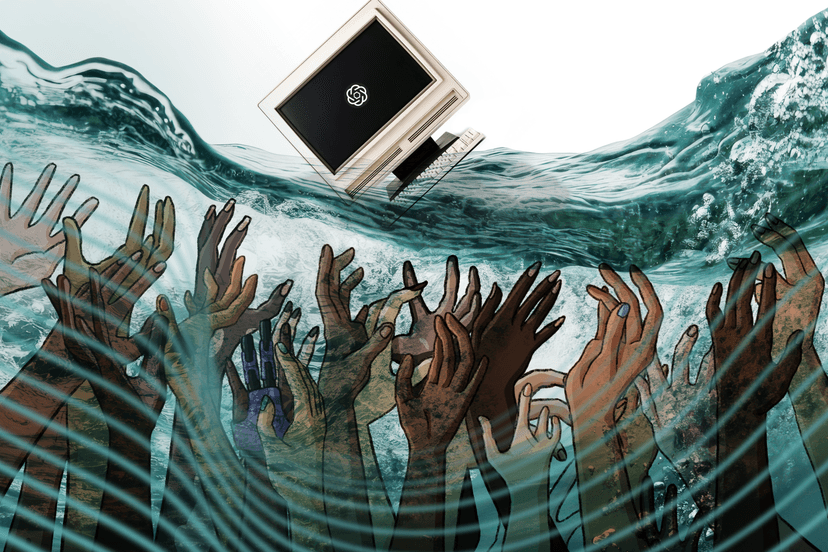
George Berkeley publishes *The Analyst*, criticizing the foundations of calculus, calling Newton's and Leibniz's methods "ghosts of departed quantities"; Jean le Rond d'Alembert encourages faith in calculus, "Persist, and faith will come"
Euler adopts symbol $\pi$ for the ratio of the circumference of a circle to its diameter, which becomes standard by the end of the century (1730 CE - 1739 CE)
Leonhard Euler active -- advances calculus and applies to a variety of contexts, develops the concept of functions, introduces a lot of modern matehmatical notation, pioneered graph theory (1725 CE - 1783 CE)
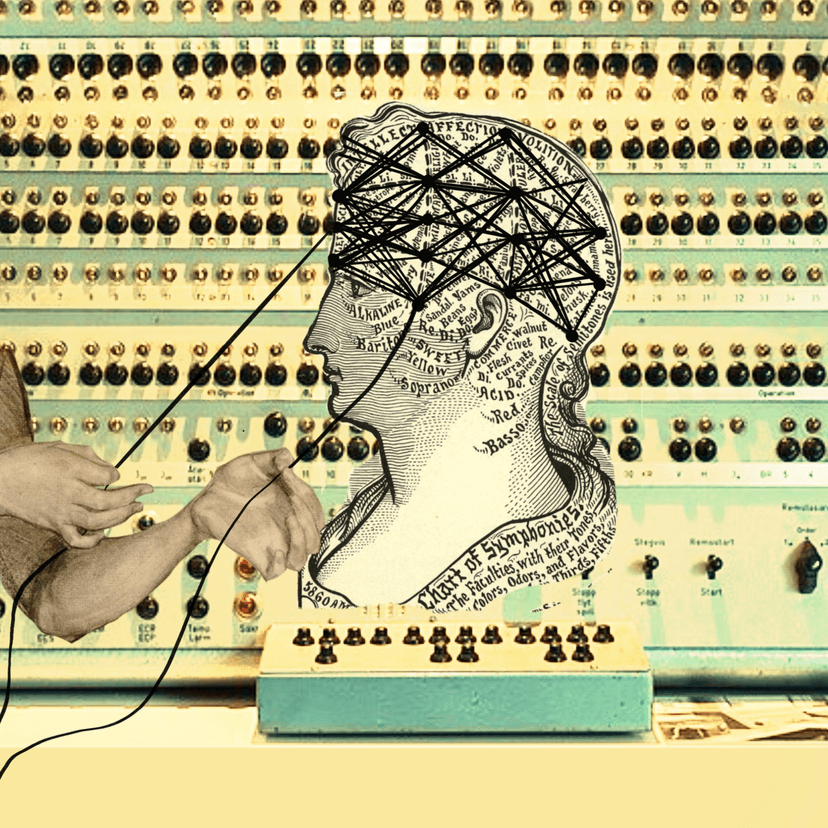
Treaty of Utrecht transfers Italian territories to Austrian Hapsburgs
parentheses become standard for grouping terms in arithmetic expressions, promoted by Leibniz, the Bernoullis, and Euler (1700 CE - 1730 CE)
Euler uses complex integers to solve Diophantine equations like x² + 2 = y³, demonstrating that extending beyond ordinary integers helps solve integer problems (1700 CE - 1799 CE)
Leibniz introduces the raised dot for multiplication to avoid confusion with the variable $x$ and advocates for the colon for division

Johann Bernoulli teaches calculus to Marquis de l'Hospital, leading to the first calculus textbook
*Philosophiæ Naturalis Principia Mathematica* by Newton published
Isaac Newton an Gottfried Wilhelm Leibniz independently develop calculus, Newton using "fluxions" and Leibniz using "infinitesimals" (1680 CE - 1699 CE)
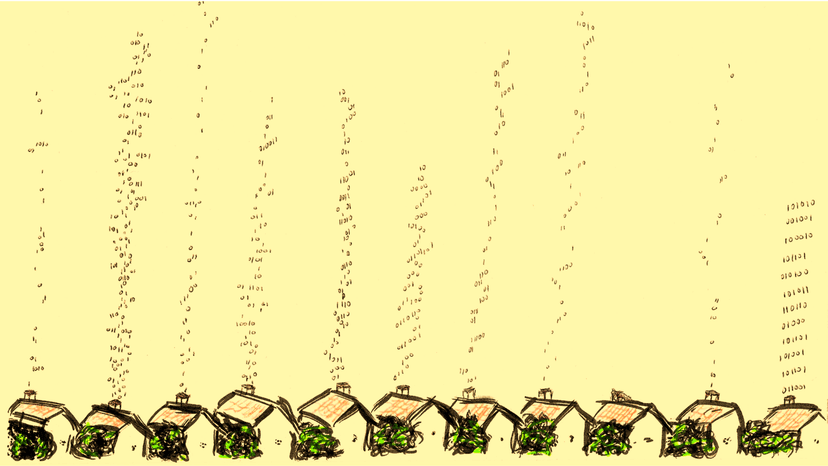
Baruch Spinoza's *Ethics* published
Qing Dynasty in China (1664 CE - 1912 CE)
Royal Society of London founded
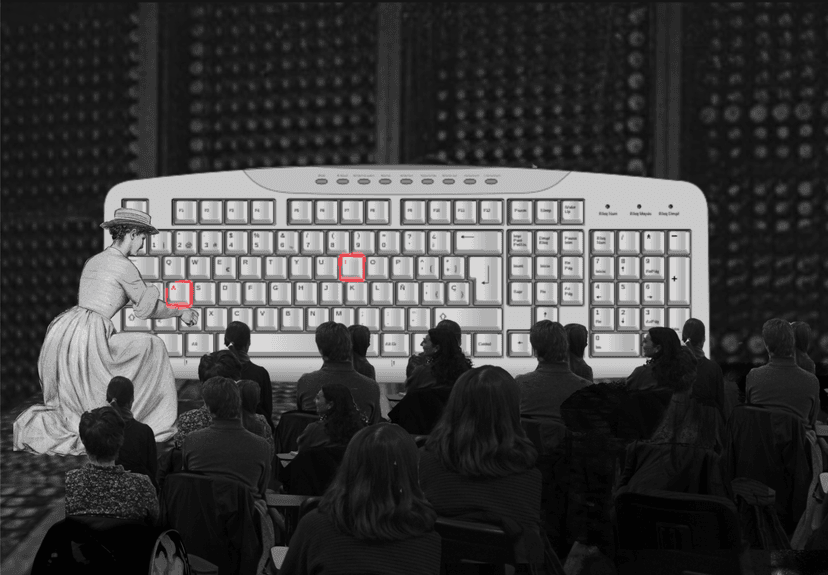
John Wallis argues in *Arithmetica Infinitorum* that negative numbers are larger than infinity, since 3/0 is infinite and 3/-1 = -3 should be larger
Thomas Hobbes writes *Leviathan*
Isaac Newton active -- develops calculus, physics, optics, gravity (1643 CE - 1727 CE)
English Civil War, execution of Charles I and rule of Oliver Cromwell (1642 CE - 1651 CE)
Rene Descartes writes *Meditations on First Philosophy*
Rene Decartes uses unconventional symbols, delaying the widespread acceptance of the = symbol.
William Oughtred advocates for +, -, = and use scolons for grouping: :5 + 6 :-7 = 4. Popularizes the $\times$ symbolf ro multiplication.
Italian plague; kills 1/3 of Venice's citizens (1629 CE - 1631 CE)
Albert Girard uses ÷ for subtraction and division interchangeably
Fermat active, introducing new algebraic problems focused on whole numbers and proving negative propositions (1600 CE - 1699 CE)
Fermat worked on representing integers by binary quadratic forms, including his theorem that every prime of the form 4n+1 can be represented as a sum of two squares x²+y² (1600 CE - 1620 CE)
Thomas Harriot develops Harriot's principle by proposing rewriting equations in the form $f(x) = 0$, revolutionizing algebraic problem solving by linking roots to zero properties of integral domains, popularized by Rene Decartes in analytic geometry (1600 CE - 1630 CE)
Bonaventura Cavalieri active -- develops the "principle of indivisibles", considering planar regions as infinite sets of parallel lines, computing areas of curved figures (1598 CE - 1647 CE)
Rene Decartes active, advancing algebraic notation, developing coordinate geometry (1596 CE - 1650 CE)
Simon Stevin publishes *The Tenth*, introduces decimal fractions, contributes to the acceptance of irrationals and transcendentals as numbers
Elizabethan government grants patents for inventions (1580 CE - 1599 CE)
Francois Viete is active, introducing systematic algebraic notation with vowels for unknowns and consonants for knowns, pursues equidimensionality in algebraic quantities, links Greek analysis to algebra, and promotes algebra as a field (1570 CE - 1579 CE)
Francis Bacon active -- develops empiricism, inductive reasoning, experimental method (1561 CE - 1626 CE)
Robert Recorde introduces the equality symbol =, explaining it as "no two things can be more equal than parallel lines", writing "5 + 6 - 7 = 4" to represent 5 + 6 - 7 = 4
Agricola writes *De Re Metallica*, mining and metallurgy
John Gerard active -- writes *Herball*, herbal medicine (1545 CE - 1612 CE)
Council of Trent begins, Catholic Counter-Reformation
Cardano publishes the *Ars Magna*, generalizing Tartaglia's method for solving all cubic equations and fourth-egree equations

*On the Revolutions of the Heavenly Spheres* by Copernicus published
supposed start of the "Scientific Revolution"
Italian mathematicians developed algebraic methods for solving cubic and quartic equations, setting the stage for the next major problem: solving the quintic
Giambattista della Porta active -- develops "natural magic" (1535 CE - 1615 CE)

Henry VIII passes Buggery Act 1533, making anal intercourse a capital offense in England
Holy Roman Empire makes sodomy punishable by death
Michelangelo writes over 300 love poems, many to men, throughout his life (1532 CE - 1832 CE)
Niccolo Machiavelli writes *The Prince*
Florence becomes a monarchy
Sack of Rome by Charles V
Mughal Empire established in India
Rafael Bombelli active; addresses issues in Cardano's method for solving cubic equations involving square roots of negative numbers, initiates the development of complex number (1526 CE - 1572 CE)
Hernan Cortes conquers Aztec Empire (1519 CE - 1521 CE)

Martin Luther nails 95 Theses to church door, beginning of Protestant Reformation, scorns Copernicus
Niccolo Machiavelli writes *The Prince*
Vasco Núñez de Balboa executes Indigenous people accused of homosexuality in Panama
Michelangelo finishes painting the Sistine Chapel ceiling
Copernicus writes *Commentariolus*, suggesting heliocentrism
Construction begins on St. Peter's Basilica under Pope Julius II
Michelangelo sculpts *David* in Florence (1501 CE - 1504 CE)
start of the "Early Modern Period"
printing of Luca Pacioli's *Summa de arithmetica, geometria, proportioni et proportionalita* introduces double-entry bookkeeping, early work on algebraic notation by European "cossists" (1500 CE - 1599 CE)
porminent mathematicians like Cardano, VIete, and Stifel reject negative numbers, calling them fictiious or absurd (1500 CE - 1599 CE)
Discovery of methods for solving cubic equations by Sciopione del Ferro, Niccolo Tartaglia, and Gerolamo Cardano (1500 CE - 1599 CE)
Niccolo Tartaglia active -- improves upon the Aristoteilan explanation for projectile motion, combination of violent and natural motion (1499 CE - 1557 CE)
Girolamo Savonarola executed in Florence for heresy -- accuses the Pope of corruption, lambasts attachment to material riches
Italian Wars, France and Spain vy for control of Italy (1494 CE - 1559 CE)
Luca Pacioli uses p for plus and m for minus, "using 5 p 6 m 7 - 4" to represent 5 + 6 - 7 = 4
Paracelsus active -- develops medicine, alchemy, proposes "wandering around" as a method, likes Aristotle but opposes the institutionalization of his thought (1493 CE - 1541 CE)
Christopher Columbus reaches the Americas

Johann Widman introduces + and - for addition and subtraction in print, using "5 + 6 - 7 das ist 4" to represent 5 + 6 - 7 = 4
Nicolaus Copernicus active -- develops heliocentrism (1473 CE - 1543 CE)
Regiomonatus uses "et" for addition and unconventional symbols, e.g. "5 et 6 7-4" to represent 5 + 6 - 7 = 4 (1470 CE - 1479 CE)

Fall of Constantinople to the Ottoman Empire to Sultan Mehmed II the Conquerer, end of the Byzantine Empire
the Chinese abacus is first mentioned
Ulugh Beg establishes Samarkand observatory, in modern Uzbekistan
establishment of Jesuit schools worldwide (1400 CE - 1499 CE)
Artists explore perspective, leading to mathematical insights (1400 CE - 1499 CE)
Ming Dynasty in China (1368 CE - 1644 CE)
Black Death in Europe (1346 CE - 1351 CE)

Ottomans capture Bursa, cutting off Byzantine Empire from Anatolia / Asia Minor
Aquinas becomes a saint, defends the Christianization of Aristotle
Nicole Oresme active, develops physics (1323 CE - 1382 CE)
Jean Buridan active -- develops physics, impetus theory (1301 CE - 1358 CE)

endof the "High Middle Ages", start of the "Late Middle Ages"
Oxford Calculators take a mathematical rather than causal approach to physics (1300 CE - 1399 CE)
Ottoman Empire established in Anatolia
William of Ockham active -- develops nominalism, theology, philosophy (1287 CE - 1347 CE)

Condemnations of 1277, rejection of Aristotelianism in Paris universities
Ninth Crusade (1271 CE - 1272 CE)
Yuan Dynasty in China (1271 CE - 1368 CE)
Bishop condemns 13 propositions of Aristotle in Paris
Eighth Crusade
Thomas Aquinas writes *Summa Theologica* (1265 CE - 1274 CE)
Maragheh observatory established
Seventh Crusade (1248 CE - 1254 CE)

Siger of Brabant, proponent of Averroism, professor at Paris (1240 CE - 1284 CE)
Sixth Crusade (1228 CE - 1229 CE)
Thomas Aquinas active -- develops theology, philosophy, science (1225 CE - 1274 CE)
Fifth Crusade (1217 CE - 1221 CE)
Roger Bacon active -- develops optics, scientific method (1214 CE - 1292 CE)
Grosseteste becomes a "secular master" at Oxford, develops light metaphysics
Mongol Empire under Genghis Khan and successors; largest contiguous land empire (1206 CE - 1368 CE)
Leonardo of Pisa writes the *Liber Abbaci*, exploring quadratic equations geometrically and addressing practical problems of currency conversion and profits
Fourth Crusade, damaged Western vs. Eastern Christian relaions (1202 CE - 1204 CE)
al-Tusi active -- develops mathematics, astronomy, proposes the al-Tusi couple (1201 CE - 1274 CE)
Venice becomes most properous city in Europe due to trading extensively with the Byzantine Empire and the Middle East (1200 CE - 1299 CE)
"fall" of Islamic "Golden Age" (1200 CE - 1299 CE)
Albertus Magnus active -- develops theology, philosophy, science (1200 CE - 1280 CE)
Third Crusade; failed to retake Jerusalem but secured Christian access (1189 CE - 1192 CE)
Second Crusade (1147 CE - 1149 CE)
Translation of Al-Khwarizmi's algebra book by Robert of Chesta
Ibn Rushd active -- develops philosophy, science, theology (1126 CE - 1198 CE)
Florentine Republic established

Al-Khwarizmi's works introduce zero to Europe (1100 CE - 1199 CE)
Arbs insert a horizontal bar between top and bottom numbers in fractions (1100 CE - 1199 CE)
Thierry of Chartres active -- develops metaphysics, theology, neo-Platonism (1100 CE - 1156 CE)
evidence of teaching at Oxford
First Crusade initiated by Pope Urban II to capture Jerusalem and the Holy Land from Muslim control (1096 CE - 1291 CE)
al-Ghazali writes "The Incoherence of the Philosophers.
Rome sacked by Robert Guiscard
al-Ghazali active -- develops theology, philosophy (1058 CE - 1111 CE)
start of the "High Middle Ages"

Ibn Sina active -- develops medicine, philosophy (980 CE - 1037 CE)
Ibn al-Haytham active -- develops optics, scientific method (965 CE - 1040 CE)
Song Dynasty in China (960 CE - 12279 CE)
Five Dynasties and Ten Kingdoms period in China (907 CE - 960 CE)
erbert d'Aurillac visits Spain to lain mathematics and reorganizes the cathedral school in Rheims, France to introduce the study of arithmetic and geometry, using Hindu-Arabic numerals (900 CE - 999 CE)
Mahavira introduces the "invert and multiply" rule for dividing fractions
Charlemagne crowned Holy Roman Emperor by Pope Leo III, reviving the Roman Empire concept
emergence of "cathedral schools" for training preists and clerics, teaching the trivium and quadrivium (800 CE - 899 CE)
Mahavira declares that $n \cdot 0 = 0$ and $n - 0 = n$, claiming $n / 0 = n$; Bhaskara II later proposes that $n / 0 = \infty$. Arabs adopt the Indian system during Islamic expansion into India, using "sifr" for zero (800 CE - 899 CE)
Al-Khwarizmi active -- develops algebra, algorithm (790 CE - 850 CE)
Charlemagne conquers Florence

"The Venerable Bede" dies, monasterial intellectual tradition
Battle of Tours, Charles Martel defeats Muslim forces
Islamic "Golden Age" begins (700 CE - 799 CE)
First Doge of Venice, Paolo Lucio Anafesto, elected; Republic of Venice established
Brahmagupta starts to recognize and work with negative quantities, treating them as debts and doing arithmetic with them, yet still not allowing negative solutions to equations (690 CE - 699 CE)
Isidore of Selville dies, "last scholar of the ancient world"
Tang Dynasty in China (618 CE - 907 CE)
Muhammad receives first revelation
Indians had already developed place-value system in base 10, using the digits 0 to 9. A small circle was used as a placeholder, "sunya" was an absence of quantity (600 CE - 699 CE)
Gregory I becomes pope
Sui Dynasty (581 CE - 618 CE)
Muhammad born, prophet of Islam
Siege of Rome by Ostrogoths during GOTHIC WAR
Aryabhata uses $$62832/20000$$ for $$\pi$$.
Cassiodorus active, establishes monastic handbook (490 CE - 585 CE)
Boethius active, establishes the seven liberal arts (480 CE - 524 CE)
Benedict of Nursia active, establishes monasticism (480 CE - 547 CE)
Zu Chongzhi uses $$355/113$$ to approximate $$\pi$$
Fall of the Western Roman Empire when Odoacer deposes the last emporer Roulus Augustus, Byzantine Empire continues
"Middle Ages" / "Dark Ages" / "Medeilval Period" begins
Dedication of first church on Rialto, San Giacomo
Southern and North Dynasties in China (420 CE - 589 CE)
Hypatia killed by Christian mob
Visigoths sack Rome
Augustine writes *Confessions*, reflection on scripture vs. classical philosophy, "handmaid" (394 CE - 400 CE)
Theodosius I makes Christianity the state religion
Hypatia active -- develops mathematics, astronomy (370 CE - 415 CE)
Augustine of Hippo active -- develops theology, philosophy (354 CE - 430 CE)
Constantine moves capital of Roman Empire to Constantinople from Rome
Constantinople founded on Byzantium
Edict of Milan legalizes Christianity
Three Kingdoms Period between Wei, Shu, Wu (200 CE - 280 CE)
Marcus Aurelius writes *Meditations*
Marcus Aurelius becomes emporer of Roman Empire (161 CE - 180 CE)
Tertullian active -- "What has Athens to teach Jerusalem?" (155 CE - 220 CE)
Ptolemy publishes *Almagest*
Ptolemy uses $$377 / 120$$ for $$\pi$$
Galen active -- develops medicine, anatomy (129 CE - 216 CE)
Hadrian becomes emporer of Roman Empire
Claudius Ptolemy active -- develops astronomy (100 CE - 170 CE)
Trajan becomes emporer of Roman Empire, expands Empire to its greatest territorial extent (98 CE - 117 CE)
Domitian becomes emporer of Roman Empire (81 CE - 96 CE)
Fire in Rome

Eruption of Mount Vesuvius
Romans expel Jews from Judea, creating Jewish diaspora
Vespasian becomes emporer of the Roman Empire, begins construction of the Colosseum (69 CE - 79 CE)
Nero overthrown, commits suicide and declared enemy of the state
Year of the Four Emporers, civil war between Galba, Otho, Vitellius, and Vespasian (68 CE - 69 CE)
Great Fire of Rome
Pliny the Younger active -- writes letters, civil historian (61 CE - 112 CE)
Claudius is poisoned by Agrippina the Younger to ensure Nero's succession
Nero becomes emperor of Roman Empire (54 CE - 68 CE)
Roman conquest of Britain
Claudius becomes emperor of Roman Empire (41 CE - 54 CE)
Caligula becomes emperor of Roman Empire (37 CE - 41 CE)
Pliny the Elder active -- writes *Natural History*, "cut and paste" (23 CE - 79 CE)
Jesus of Nazareth born
Seneca active -- develops Stoicism (1 BCE - 65 CE)
Tiberius becomes emperor of Roman Empire after Augustus dies; Tiberius is Augustus' adopted son but chosen last since all other successors died. The Principate is institutionalized with this lineage succession.
Roman Empire established, Augustus becomes first emperor
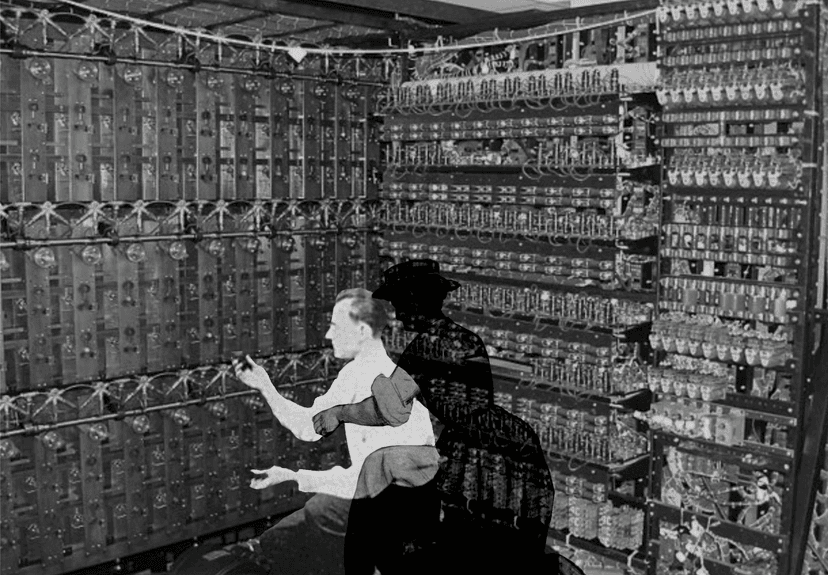
Battle of Actium, Octavian defeats Antony and Cleopatra to become the sole ruler of Rome
the Second Triumvirate forms a peace pact with Sextus Pompey in Sicily but then wage war and kill him in 35 BCE
Octavian allies with the Senate to defeat Mark Antony at Mutina, then abandons the senate
Cicero is killed by the Second Triumvirate as part of the Second Proscription launched by the Second Triumvirate; more organized than Sulla's proscription
Second Triumvirate formed by Octavian, Antony, Lepidus
Cicero delivers the 14 *Philippics*, a denunciation against the consul Mark Antony
Julius Caesar assassinated by a conspiracy of 60-70 senators, including Cassius, Brutus' co-leader
Vitruvius writes *On Architecture*
Caesar pardons Cicero
Pompey orchestrates to deny Caesar the right to run for re-election to the consulship after Caesar wants to run again; Mark Antony vetoes the anti-Caesar measures but is threatened by the Pompeians
Caesar crosses the Rubicon, civil war begins; Cicero sides with the Pompeians; Pompey is defeated in Greece and flees to Egypt; Egypt kills pompey.

Cicero serves as governor of Cilicia (51 BCE - 50 BCE)
Cicero is recalled at the behsest of Pompey
Caesar conquers Gaul (58 BCE - 50 BCE)
Cicero is exiled by the tribune Clodius Pulcher
Florence established by Romans as a colony for veteran soldiers
Rise of Julius Caesar (59 BCE - 44 BCE)
Caesar is elected to consul
Roman historian Livy is born
Lucretius writes *On the Nature of Things* (59 BCE - 50 BCE)
Cicero becomes consul
Octavian / Augustus is born
Sulla becomes consul, commands the Roman army to make war against the Mithradates king of Pontus
Sulla marches his legions on Rome, violating the sacrosanct boundary, proscribes all of his enemies, reorganizes the government, castrates the plebian tribunate, and benefits the optimates
Social War between Rome and its Italian allies, who demand Roman citizenship (91 BCE - 87 BCE)
Lucretius active, revives Epicureanism with political dimensions (99 BCE - 55 BCE)
Julius Caesar active -- conquers Gaul, civil war, dictator (100 BCE - 44 BCE)
The Chinese *Nine Chapters on Mathematical Art* is written, containing similar notation for fractions to our contemporary one
Marcus Tullius Cicero is buorn in Arpinum
Gaius Marius is elected consul, begins military reforms
Marius and Sulla reform the army and political system (107 BCE - 78 BCE)
Jugurthine War, Gaius Marius rises to prominence with the help of Lucius Cornelius Sulla (112 BCE - 105 BCE)

Gaius Gracchus is assassinated by the Senate for proposing economic reforms unpopular with the aristocracy; 3000 of his followers are executed; open political violence era
Gaius Gracchus, younger brother of Tiberius Gracchus, is elected to the tribune of the plebs
Gracchi Reforms, Tiberius and Gaius attempt law reforms - beginning of the Gracchi period (133 BCE - 121 CE)
Tiberius Gracchus is assassinated by the Senate for proposing land reforms unpopular with the aristocracy

Rome concludes the third Punic war, destroying Carthage
Carneades takes over Plato's Academy
Roman conquest of Greece
Han Dynasty in China starts
Rome conquers Syracuse
Archimedes killed by Roman soldier in siege of Syracuse
Rome intervenes in various conflicts between different Greek kingdoms, Rome annexes all of Greece eventually (214 BCE - 148 BCE)
second Punic war, Hannibal gets into Italy but does not defeat Rome, Romans defeat Carthage again and take over their empire (218 BCE - 201 BCE)
Qin Dynasty unifies China, starts the Great Wall
Archimedes shows that $$\pi$$ is between $$3 \frac{10}{71}$$ and $$3 \frac{10}{70}$$.
first Punic war, the Romans defeat the Carthiginians
Punic Wars between Rome and Carthage (264 BCE - 146 BCE)
Archimedes active -- develops mathematics, physics (287 BCE - 212 BCE)
the fifth secession of the Plebs, Lex Hortensia, gives decisions of the plebeian council the force of law, gives plebians full equality - makes decisions of the Plebian Council binding on all citizens, ends the struggle of the orders
Archimedes writes *The Sand Reckoner* (299 BCE - 200 BCE)
Euclid publishes *Elements of Geometry*
Aristotle moves from Athens, thinking it is no longer safe, and dies
Alexander the Great dies
Euclid active -- develops geometry (325 BCE - 265 BCE)
Philip II of Macedon defeats Greece at Chaeronea
Aristotle writes the *Nicomachean Ethics*
Epicurus active -- develops atomism, hedonism (341 BCE - 270 BCE)
fourth secession of the Plebs, an obscure military revolt
Latin and Samnite wars (343 BCE - 290 BCE)
Speusippus, Plato's nephew, becomes head of the Academy; modifies the school towards a dogmatically skeptical phase
Lician-Sextian reforms, allowing plebeians to become consuls
Plato writes *The Republic*
Aristotle active -- develops "empiricism" (384 BCE - 322 BCE)
rise of Asclepian healing temples (399 BCE - 300 BCE)
Babylonians put a dot to avoid ambiguity in spacing to represent absent places in their place value system (399 BCE - 300 BCE)

The Mayan numeration system uses dots for 1, bars for 5, and a positional system generally based on 20, as well as a shell symbol for zero
Athens is returned to nominal democratic rule after the Thirty Tyrants are overthrown
the Thirty Tyrants rule Athens, oligarchic government (404 BCE - 403 BCE)
Plato active -- develops idealism (427 BCE - 347 BCE)
Peloponnesian War between Athens and Sparta over hegemony of Greece; results in Athenian defeat (431 BCE - 404 BCE)
the third secession of the Plebs, ends intermarriage prohibition
the second secession of the Plebs, ends the Decemvirate after the Decemvir attempts to enslave Verginia as his sex slave
The Twelve Tables, Roman law is codified in writing by the decemvirite (451 BCE - 450 BCE)
Democritus active -- develops atomism (460 BCE - 370 BCE)
Ephialtes creates "radical democracy" in Athens, e.g. paying juries, sometimes with thousands of people serving on juries
Hippocrates active -- develops medicine, humor theory (460 BCE - 370 BCE)

Pericles active in the Golden age of Athenian democracy (461 BCE - 429 BCE)
Socrates active -- develops dialectic (470 BCE - 399 BCE)
Warring States Period in China (475 BCE - 221 BCE)

Leucippus active -- proposes atomism (480 BCE - 420 BCE)
Second Persian invasion of Greece, Athens is burned, but Persians defeated at Salamis (480 BCE - 479 BCE)
Empedocles active -- proposes four elements (484 BCE - 424 BCE)
Persian Wars; Athens and Sparta defeat Persia (492 BCE - 449 BCE)
First Secession of the Plebs in Rome, plebeians demand political representation, establishes the tribunes of the plebs
Ionian Revolt against Persia, crushed (499 BCE - 493 BCE)
defeat of the king of Rome, oligarchy senate established
Anaxagoras active -- proposes "nous" as the arche (500 BCE - 428 BCE)
roughly the time Confucius was active

Cleisthenes establishes democracy in Athens, giving power to the people
Roman Republic founded after the rape of Lucretia and the revolt against Tarquin the Proud
Parmenides active -- rejects Heraclitus, proposes a static universe (515 BCE - 450 BCE)
Lucius Tarquinius Superbus becomes the seventh king of Rome after killing Servius Tullius
Kingdom of Lydia falls to Persia
Persian expansion under Cyrus the Great (559 BCE - 500 BCE)
Pythagoras active (570 BCE - 490 BCE)
Servius Tullius becomes the sixth king of Rome
Solon institutes debt relief in Athens, was popular among the indebted
Lucius Tarquinius Priscus becomes the fifth king of Rome
Thales of Miletus active, "first scientist" -- searches for an "arche", or natural explanation for natural phenomena (624 BCE - 546 BCE)
Ionian philosophers active -- propose different arche (624 BCE - 428 BCE)
Ancus Marcius becomes the fourth king of Rome

Tullus Hostilus becomes the third king of Rome
Hesiod, *Works and Days* and *Theogony*
Numa Pompilius becomes second king of Rome, introduces the Roman lunar calendar

Rome founded by Romulus and Remus, twin brothers of Mars; Romulus is the first king
Spring and Autumn Period in China (770 BCE - 476 BCE)
Development of Upanishads in India and key Hindu texts (800 BCE - 400 BCE)
Veneti people inhabit Venice area (999 BCE - 900 BCE)
Zhou Dynasty in China (1046 BCE - 256 BCE)
date of the Ebers papyrus, Egyptian herbal medicine text
date of the Edwin Smith Papyrus, Egyptian surgical text
Babylonians knew how to solve quadratic equations, essentially using the method of completing the square, showing early algebraic thinking that would eventually contribute to equation theory
The Babylonians use spaces to indicate missing places in theri place value statement
Shang Dynasty in China starts
The Rhind Papyrus approximates the area of a unit circle as $$4^2$$.
Reign of Hammurabi, Babylonian king (1792 BCE - 1750 BCE)
dates of many astronomical cuniform tablets (1900 BCE - 1600 BCE)
Babylonian base-60 place-value number system appear
Xia Dynasty in China starts

peak of Indus Valley civilization (2600 BCE - 2500 BCE)
The Egyptian Hieratic Numeration system is introduced, using distinct symbols for 1-9 and each power of 10.
Egyptian pyramids construction (2700 BCE - 1500 BCE)
Egyptian base-10 number system appears

Stonehenge construction (3100 BCE - 1600 BCE)